- Bangladesh
- Belgium
- Canada
- China
- Egypt
- Germany
- India
- Indonesia
- Japan
- Morocco
- Netherlands
- Pakistan
- Poland
- Spain
- Sri Lanka
- Tunisia
- Turkey
- UK
- USA
- Vietnam
T&A Industry Led by Apparel Imports and Retail Sales
90%
UK Clothing is Imported
UK textile and apparel industry is the third largest globally, following China and the United States. In 2024, the UK’s fashion and textile retail market was valued between £53–57B. Notable brands include Burberry, Marks & Spencer, Barbour, and ASOS, which have significantly influenced both domestic and global fashion trends. The top countries importing consumer textiles are China, Bangladesh, Turkey and India.
Sources: A Material Flow Analysis of the UK Clothing Economy – ScienceDirect, WRAP-Textiles Market Situation, Special Report – UK
Dependence on Imported Cotton and a Major Wool Producer
50%
British Wool Clip goes into Carpeting
The UK does not produce cotton domestically. However, it is a notable wool producer, accounting for 3% of global wool production in 2019. By 2020, the UK textile sector generated £5.8 billion in materials, ranging from luxurious cashmere to worsted wool, tweeds, and tartans, as well as a diverse array of technical and performance textiles.
Sources: UK Cotton Production By Year, British Wool Review 2022, Everything You Need To Know About the UK Textile Sector
Strong Technical Textile Sector and Limited CMT
44.3%
UK Apparel Production comes from the ‘Outerwear’
The industry is centred on niche, small-scale manufacturing, with strengths in printing, knitwear, and processing activities like dyeing, finishing, and fabric knitting. The UK also benefits from strong tailoring fabric mills, though much output is exported for garment construction. CMT remains limited. The number of UK T&A manufacturers have been steadily increasing, supported by strong growth in the technical textiles sector
Sources: WRAP-Textiles Market Situation, The Future of UK Domestic Manufacturing
Limited Sorting and Recycling Capacity
34 kT
Post Consumer Textile Waste was Recycled Locally (2022)
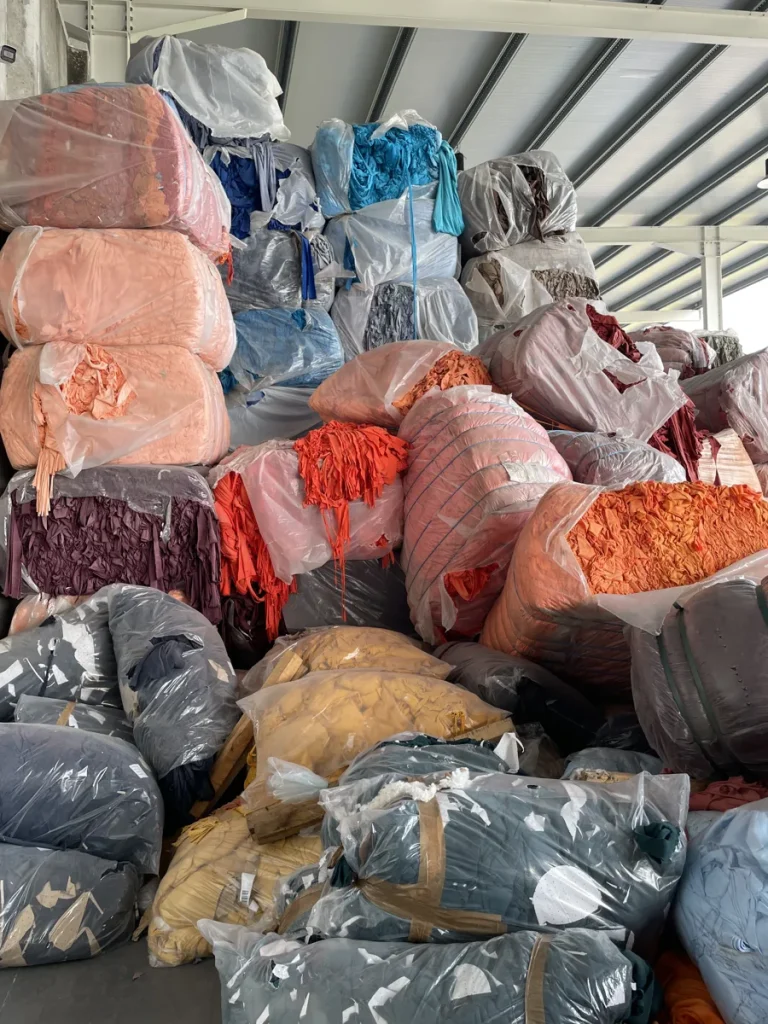
Only a fraction of the waste generated in UK is recycled domestically. Many textiles are sent abroad for sorting and grading, then re-imported due to the UK’s limited capacity and higher labour costs. This reliance on exports makes the UK one of the world’s largest used clothing exporters, with the UAE, Ghana, and Pakistan as key destinations.
Sources| Waste Type | Composition | Price | Notes |
|---|---|---|---|
| Post-Consumer | Cotton / Wool / Acrylic | €0.02–0.14 / kg | Feedstock for fibre-to-fibre recycling |
Notes:
Sources- The majority of this recycled product (90%) is sold within the UK. The domestic market is prevalent for manufacturing components and mattress materials, whilst recycled wipers are largely exported.
- 72% of Textiles sent for end of life enter kerbside residual waste stream ( 546,390 t ) where 84% goes to incineration for energy recovery, 11% to landfill and 5% others
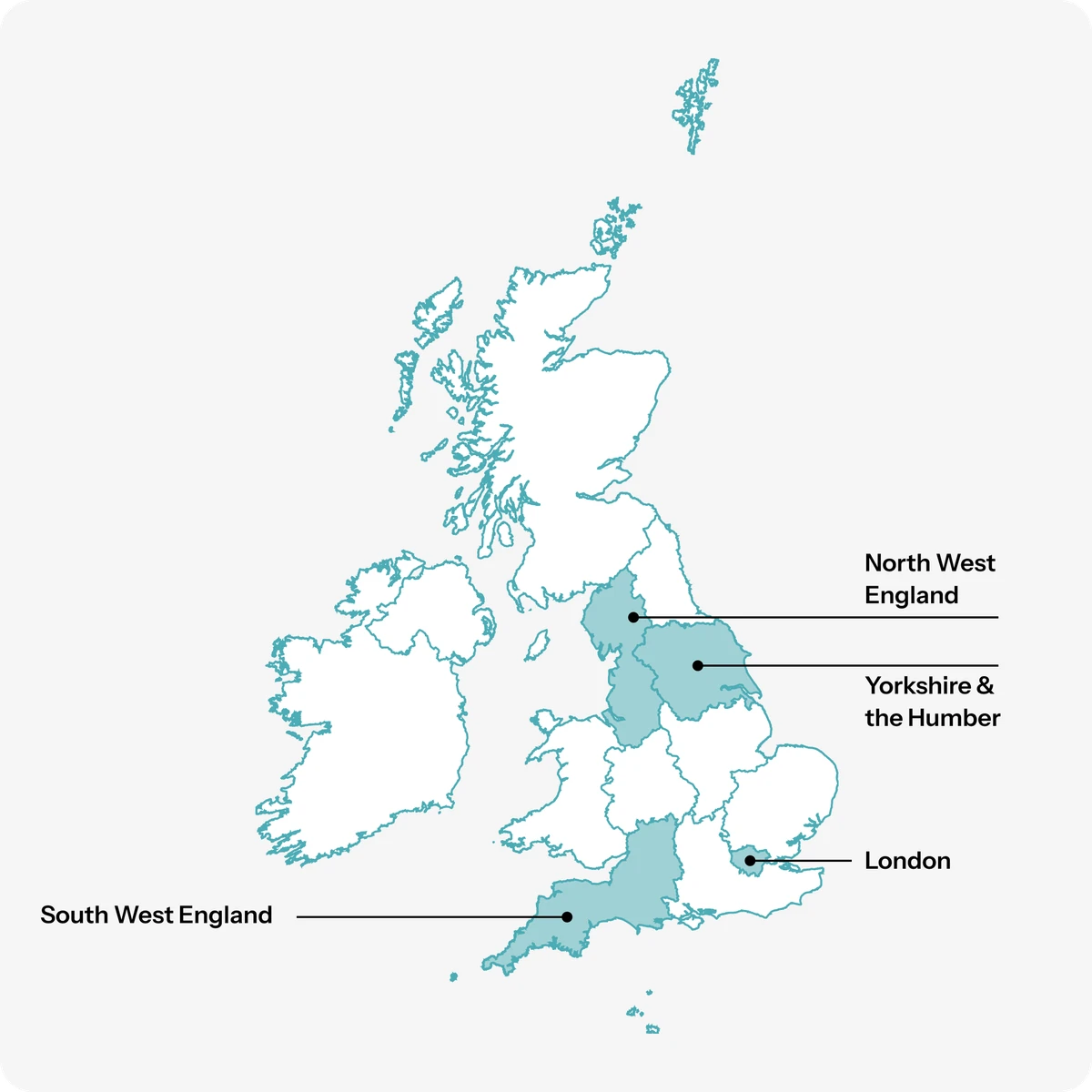
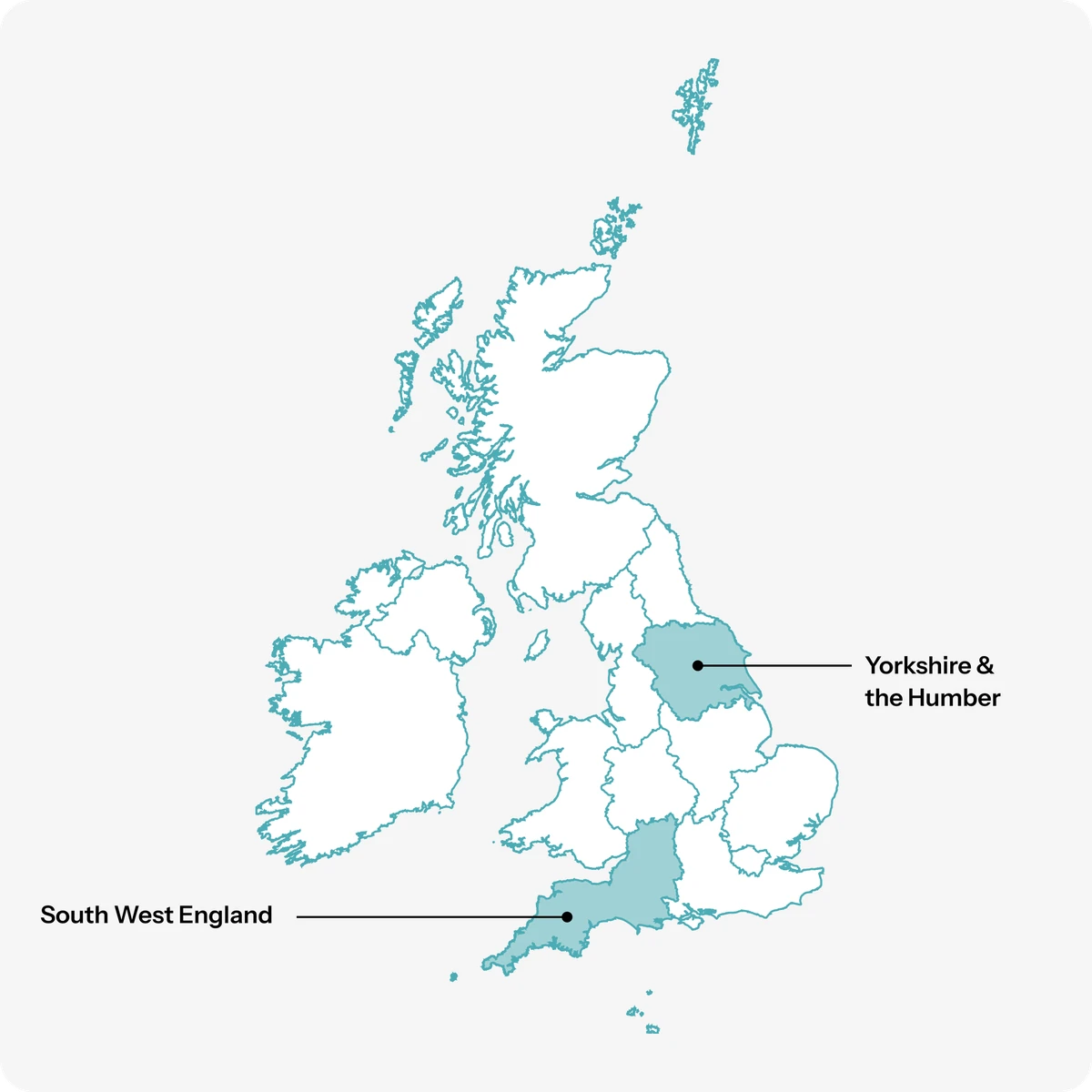
Key regions with apparel production:
London, North West (England), South West (England), Yorkshire & the Humber
Notes:
- Leading up to 2021, there was a significant decline in the value and volume of textile imports and exports, largely due to Covid-19 and Brexit. However, following 2021, the volume of imports has recovered by only 12.5%. Yet, the cost of those imports is greater than pre-pandemic levels, indicating a shift towards a higher £/kg ratio Sources
“Maximising Resources, Minimising Waste” programme (part of England’s Waste Prevention Programme)
It outlines plans to introduce a requirement for non-domestic premises to present reusable and recyclable textiles separately, with collecting organisations required to separately collect and store them for sorting and treatment in-line with the waste hierarchy
SourcesWaste Exemption – T2: Cleaning Textiles
This exemption permits the laundering or cleaning of waste textiles so they can be reused or recycled. It sets a limit of 20,000 tonnes per site, requiring operations to be carried out at premises with sealed drainage, and must be registered with the Environment Agency
Sources9.23 kTon
Import quantities
(HS 6309, 631010) – 2024
432.14 kTon
Export quantities
(HS 6309, 631010) – 2024
Notes:
- Over half of the UK’s imported used textiles come from Ireland, driven by the lowest value per kilogram (£0.62). In contrast, Poland and the Netherlands are key suppliers of vintage clothing to the UK market. Sources
12.15%
Share of modern renewables in final energy consumption (2021)
79.5%
Renewable electricity generation: Wind
13.4%
Renewable electricity generation: Solar
7%
Renewable electricity generation: Hydro
Notes:
- UK ETS Compensation Scheme: It helps energy-intensive industries offset the extra carbon costs they face under the UK Emissions Trading Scheme. Eligible businesses can currently reclaim up to 75% of their indirect emissions costs, or 1.5% of their Gross Value Added (GVA), whichever is higher, to protect competitiveness and prevent carbon leakage abroad Sources
- West of England Green Business Grants: Provides funding to small and medium-sized enterprises (SMEs) and registered charities in Bath & North East Somerset, Bristol, and South Gloucestershire. Grants of up to £15,000 are available to support projects that reduce carbon emissions, enhance energy efficiency, and lower utility costs. Eligible projects must be based on recommendations from an independent carbon assessment and completed by March 2026. Sources