- Bangladesh
- Belgium
- Canada
- China
- Egypt
- Germany
- India
- Indonesia
- Japan
- Morocco
- Netherlands
- Pakistan
- Poland
- Spain
- Sri Lanka
- Tunisia
- Turkey
- UK
- USA
- Vietnam
Egypt’s T&A Sector is a Major Industrial Export Industry
$ 2.846B
Apparel Export
As Egypt’s second-largest industrial sector, textiles and apparel account for 8% of exports, 34% of industrial production, and 3.4% of GDP. The country exports mainly woven goods to the USA, Turkey, and Saudi Arabia, benefiting from duty-free access to the EU with a double transformation rule of origin.
Sources: In Data: Egypt’s Apparel Market Projected to Hit $3.9Bn by 2025, Report on Egyptian Apparel Export Performance For 2023/2024, Apparel and Textiles Industry in Egypt
World-Class Cotton Producer yet a Net Importer
$868M
Cotton Imports (2024)
Source: Value Chain Analysis for Apparel from Egypt
Egypt is Africa’s leading producer of extra-long-staple (Giza) cotton, cultivating 300–400 thousand bales annually, with around 80% grown in the Nile Delta. While it produces the world’s highest-quality cotton, domestic demand significantly exceeds supply, making the country a net importer. Most of Egypt’s textile industry relies on imported short- and medium-staple cotton varieties, commonly used in products such as denim and T-shirts. The sector also depends heavily on man made fiber imports, given limited local production. In contrast, Egyptian ELS cotton is used for premium home textiles and high-end apparel
Egypt’s Full In-Country T&A Supply Chain
90%
Egypt’s Apparel Production is Handled by Private Industries
Egypt’s textile industry covers all tiers of the supply chain, with the public sector leading in spinning, weaving, and hemming, while most garment production is privately managed. The country remains highly competitive in spinning and weaving thanks to its strategic location, low labor costs, and affordable electricity. It hosts around 3,243 companies, producing 315 million apparel items, with 25% of the industry focused on textile production.
SourcesTextile Recycling Leveraging a Strong Spinning Industry
35%
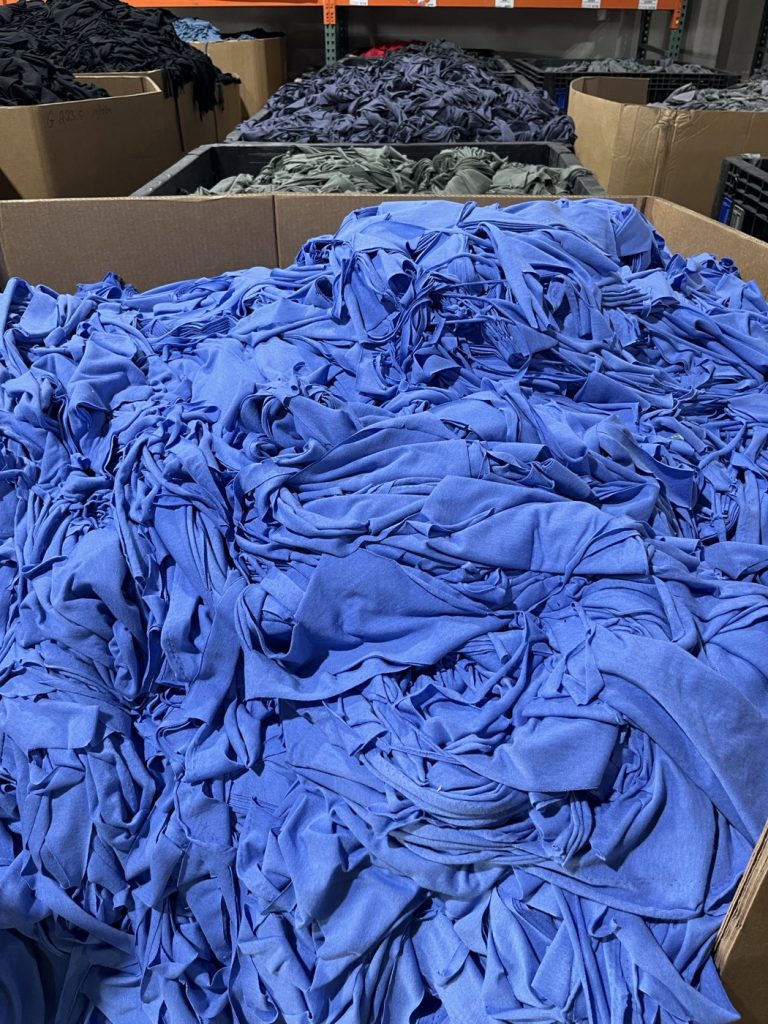
High-Value Waste is Recycled to Average Standards
55%
High-Value Waste is Recycled to Best International Standards
As per the UNIDO report, Egypt’s waste market is more structured, active, and profitable than Tunisia or Morocco. While some T2T recycling exists, it often relies on spinning waste or imported feedstock due to local quality issues. High-quality waste (100% cotton or cotton-rich) is mostly exported or downcycled into automotive, mattress, or pillow industries.
SourcesNotes:
Sources- RMG waste represents the biggest volume of Egypt textile waste
- The RMG waste in the Egyptian industry is expected to be a lower-quality cotton waste as 70% of its cotton is exported out and the remaining is used for home-textile industry.
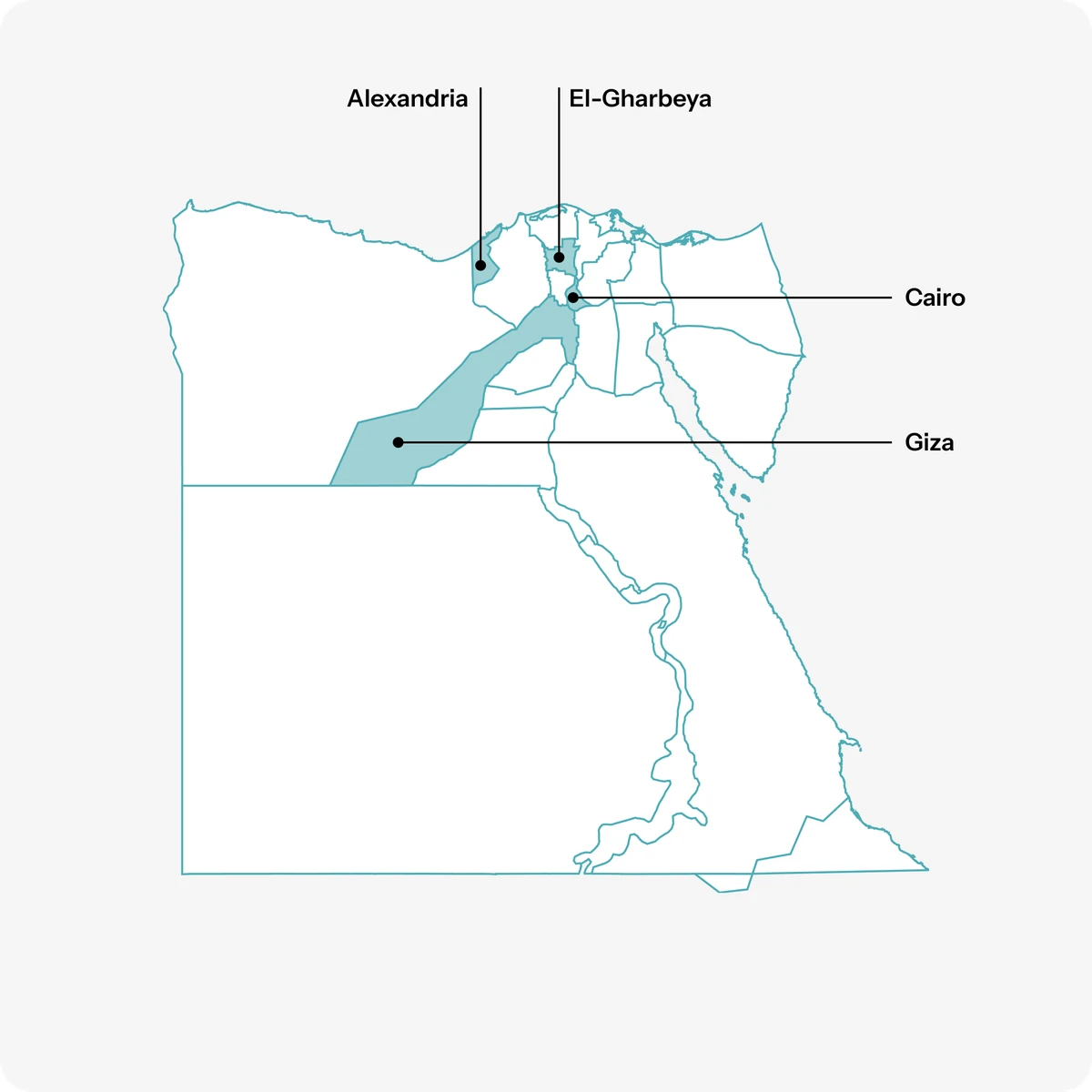
Key regions with fibre production:
Beheira, Kafr El-Sheikh, Monufia, Damietta, Beni Suef, Sohag
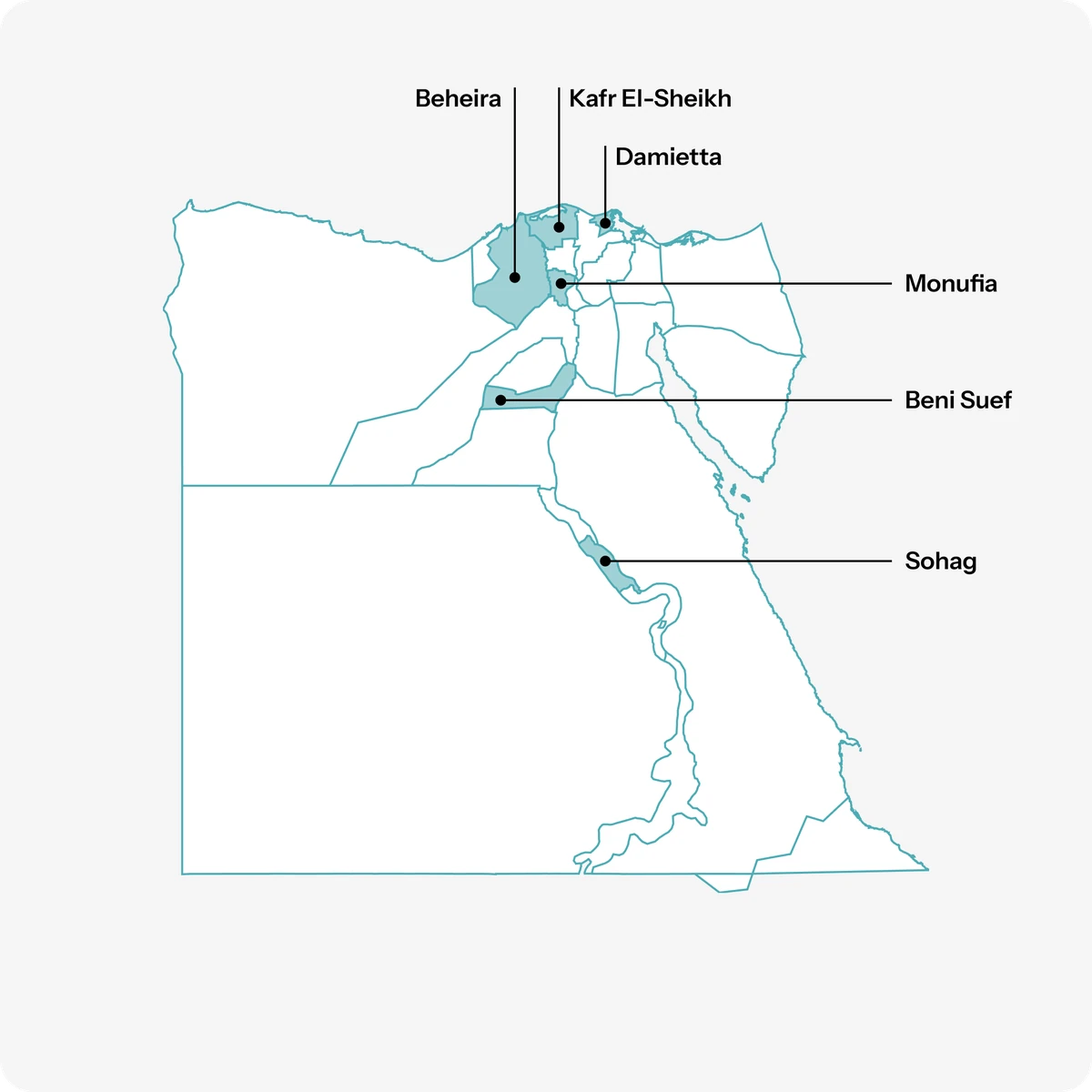
Notes:
- Egypt is attracting significant investment in its textile industry through the development of specialized industrial zones, most notably Al Sadat City. These zones provide “plug-and-play” infrastructure, allowing companies to set up quickly and operate efficiently while reducing long-term overhead costs. Sources
The EU co-funded National Solid Waste Management Programme (NSWMP) in Egypt (2022-2026)
It aims to transform Egypt’s waste sector by establishing climate-sensitive, circular economy-based solid waste management systems. It supports institutional development, policy implementation, infrastructure upgrades, and capacity building in targeted governorates (Kafr El Sheikh, Qena, Gharbia, and Asyut). The program also enables green private sector investments while reducing environmental and public health risks associated with poor waste management.
Sources15.27 kTon
Import quantities
(HS 6309, 631010) – 2024
0.12 kTon
Export quantities
(HS 6309, 631010) – 2024
Notes:
- Greater Cairo region represents more than 50% of the country’s yearly waste generation Sources
- In Free Zones, textile and garment waste management is hindered as all waste must be cleared by customs before leaving the zone. This adds administrative and bureaucratic layers, slowing down efficient handling. Sources
3.03%
Share of modern renewables in final energy consumption (2021)
56%
Renewable electricity generation: Hydro
24.4%
Renewable electricity generation: Wind
19%
Renewable electricity generation: Solar
Notes:
- Egypt’s Investment Law No. 72/2017: It provides tax deductions, customs exemptions, and streamlined approvals to encourage investments in renewable energy, benefiting green energy projects and industries like textile manufacturing integrating sustainable energy solutions. This boosts financial viability and operational ease for both local and foreign investors Sources
- GEFF Egypt, managed by the EBRD: It provides concessional loans and technical support via local banks to promote renewable energy and energy-efficient technologies. It specifically targets MSMEs, helping them overcome financial barriers to green investment. By enabling sustainable upgrades, the program enhances MSME competitiveness while advancing Egypt’s green economy goals. Sources