- Bangladesh
- Belgium
- Canada
- China
- Egypt
- Germany
- India
- Indonesia
- Japan
- Morocco
- Netherlands
- Pakistan
- Poland
- Spain
- Sri Lanka
- Tunisia
- Turkey
- UK
- USA
- Vietnam
T&A Industry Significant GDP Contribution and Key EU Exporter/Importer
€13.6B
Apparel export (2023)
Source: Circular Strategies and Social Impacts in the Spanish Textile Value Chain
€19.14B
Apparel Import (2023)
Source: What is the Demand for Apparel on the European Market?
T&A is vital to the Spanish economy, contributing 2.8% of the national GDP and 8.7% of all exports. Though a net importer of apparel, it stands as one of the top 6 EU apparel exporters and importers with 63.6% of it coming from developing countries.
Second Largest Cotton producer within the EU
125,000 bales of 480 pounds each
Cotton Export (2023/24)
Spain is the EU’s second-largest cotton grower after Greece, producing just over 20% of the EU’s cotton output, with cultivation almost entirely concentrated in Andalucía (Guadalquivir River basin). The country’s cotton textile processing industry, however, is primarily located in Catalonia, forming the main hub for yarn spinning, weaving, and fabric production.
SourcesSME-Driven, Fragmented Structure with Mass-Market Focus
80%
Textile Firms are SMEs
92%
Garment Firms are SMEs
Spain’s T&A sector is SME-driven and highly fragmented, relying on subcontracting, with vertical integration largely limited to large groups like Inditex. Most companies operate as small, specialized units within broader supply chains. The industry primarily focuses on mass-market and mid-value fashion.
SourcesLeading Recycled Fiber Producer with Mechanical Recycling
12%
Used clothing is recycled within Spain
88%
Used clothes end in landfills
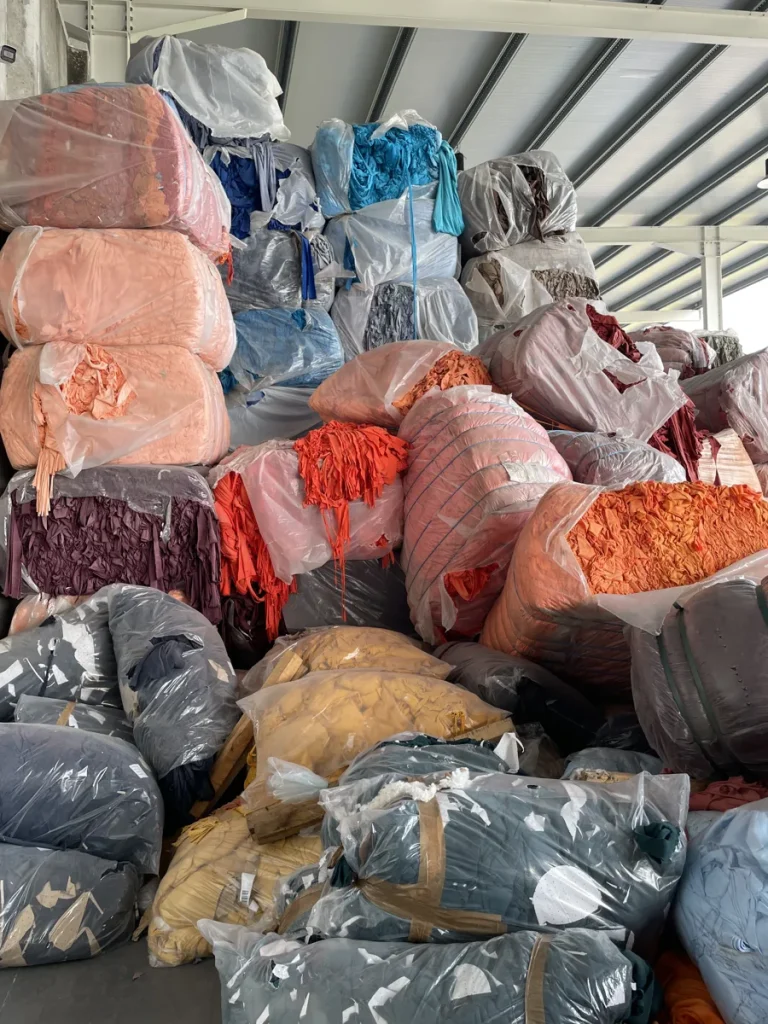
Spain is considered the leading manufacturer of recycled fibre in Europe. Producing around 61,000 of which 50,000 tonnes derive from pre-consumer textile waste. With an estimated waste rate of 19 kg/person, Spain generates 890,244 tonnes of textile waste annually, of which only 108,296 tonnes are sorted. Recycling in Spain is mainly mechanical and labour-intensive.
Sources: Circular Strategies and Social Impacts in the Spanish Textile Value Chain, Locations for Textile Waste Disposal, Textile Waste Management in Europe’s Circular Economy
| Waste Type | Composition | Price | Notes |
|---|---|---|---|
| Post-Consumer | Cotton / Wool / Acrylic | €0.02–0.14 / kg | Feedstock for fibre-to-fibre recycling |
Notes:
- Spain has a 4% separate capture rate, meaning only this share of textiles is collected separately from general municipal waste, enabling diversion from landfills or incineration and providing cleaner feedstock for reuse and recycling Sources
- Much of Spain’s recycled fibre output comes from pre-consumer waste, which is cleaner and easier to recycle than post-consumer textiles. Apart from this, it also has a supportive ecosystem that directly enables and incentivizes the recycling infrastructure and processes that underpin its leadership in recycled textile fibre production. Sources
Notes:
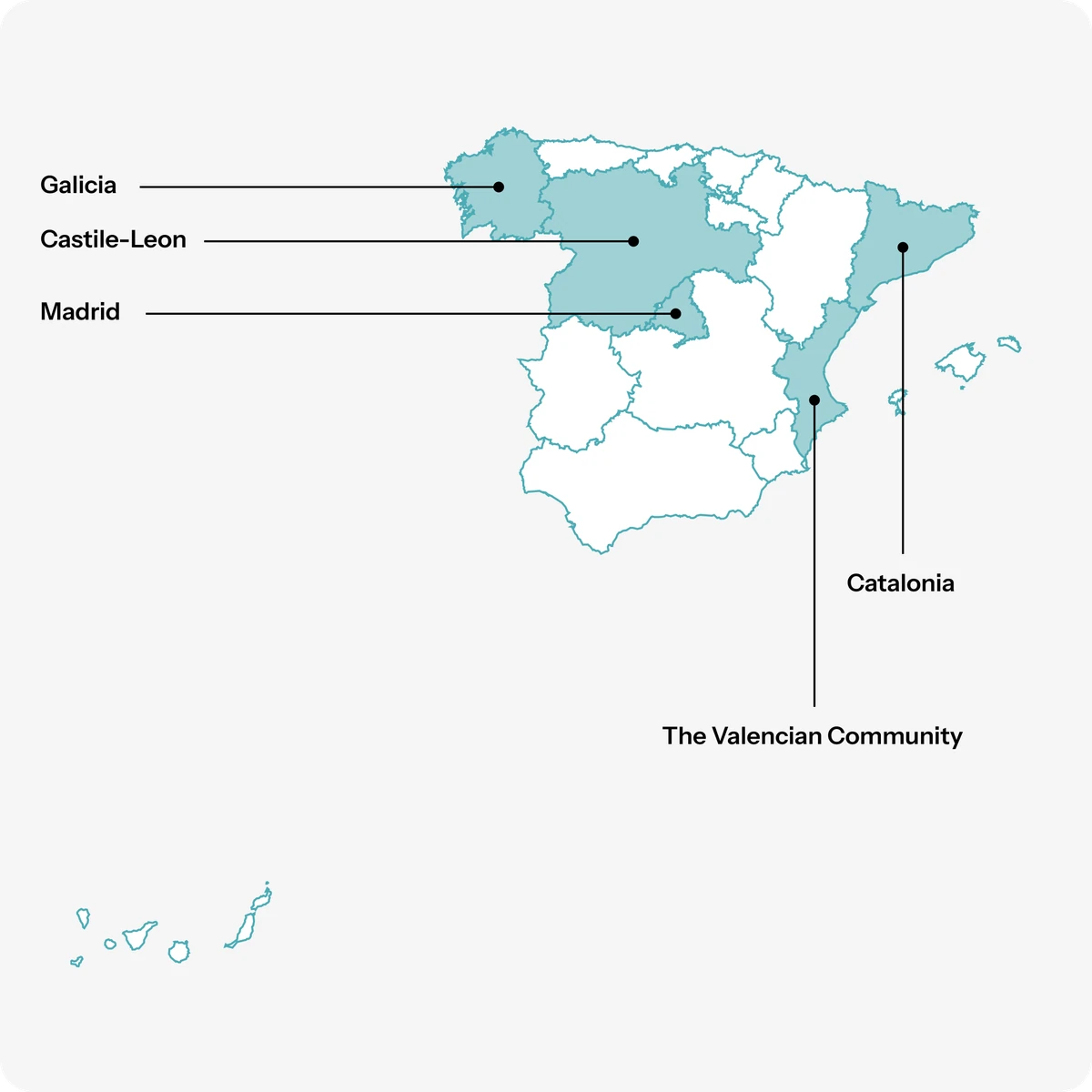
- Spanish textile giant Inditex also increased its production in Spain by 13% in 2022. It has 10 of its own production plants in Galicia, which set the group’s standard for the rest of its suppliers and manufacturers. Sources
Ley 7/2022, de 8 de abril (Law on Waste and Contaminated Soils for a Circular Economy)
It is a comprehensive Spanish law that transposes the EU Directive 2018/851 into national law. It mandates that an Extended Producer Responsibility (EPR) regime for textiles must be operational in Spain by April 2025. Article 12 assigns responsibility to local municipalities for selectively collecting and managing municipal textile waste, while Additional Provision 19 requires that at least 50% of the value of textile waste management contracts must be awarded to social enterprises or special employment centers, thereby promoting social inclusion and employment.
SourcesSpain’s PERTE Economía Circular
It is a strategic initiative with €492 million in funding, aiming to accelerate the implementation of the Spain Circular Strategy 2030 by targeting sectors such as textiles for sustainable design, enhanced recycling, and efficient resource management. The program seeks to reduce reliance on virgin raw materials, improve waste management, and promote business innovation in circular economy projects
SourcesEspaña Circular 2030
In this, the textile and garment sector is identified as one of the key areas for circular economy action. The strategy emphasizes the need for a transition from a linear to a circular model in this sector, aiming to reduce environmental impacts associated with textile production and consumption. Specific objectives include promoting eco-design, enhancing recycling processes, and encouraging the reuse of textile materials to extend their lifecycle and reduce waste generation.
SourcesEU Strategy for Sustainable and Circular Textiles
EU Strategy for Sustainable and Circular Textiles is a comprehensive plan aiming to transform how textiles are designed, produced, consumed, and disposed of across the EU. It includes measures to make textiles durable, repairable, recyclable, and largely made of recycled fibers, while addressing overproduction, microplastic release, and greenwashing. The strategy sets the goal to achieve a sustainable and circular textile sector by 2030, aligned with the European Green Deal and Circular Economy Action Plan.
SourcesWaste Framework Directive
Strengthens waste management by mandating all EU member states to separately collect textile waste from January 1, 2025 and imposing Extended Producer Responsibility (EPR) schemes requiring producers to finance and organize the entire lifecycle management of their products’ waste. It emphasizes the waste hierarchy prioritizing prevention, preparing for reuse, recycling, recovery, and environmentally sound disposal, with clear definitions on when waste ceases to be waste (end-of-waste criteria)
SourcesEU Waste Shipment Regulation
Effective May 20, 2024, it tightens controls on waste shipments, including textiles, within and outside the EU. It bans most waste exports for disposal after May 21, 2026, requires audits, digital tracking, and enforces stricter penalties. The law supports the circular economy by ensuring environmentally safe waste management.
SourcesEcodesign for Sustainable Products Regulation (ESPR)
Effective July 18, 2024, it mandates durability, repairability, recyclability, and increased recycled content for textiles and most products. It requires Digital Product Passports, bans destruction of unsold textiles by large companies, and enforces life cycle environmental impact reduction. The regulation enables product-specific rules and harmonized penalties, driving a circular economy and sustainable production.
Sources46.81 kTon
Import quantities
(HS 6309, 631010) – 2024
138.98 kTon
Export quantities
(HS 6309, 631010) – 2024
Notes:
- Spain is the EU’s second largest exporter of textile waste outside of EU. Spain itself, is the main export destination for textile waste originating from Portugal, although to a much smaller extent Sources
- Top EU country where textile waste is landfilled ( (20,517 tonnes)
18.96%
Share of modern renewables in final energy consumption (2021)
44.6%
Renewable electricity generation: Wind
30%
Renewable electricity generation: Solar PV
21.6%
Renewable electricity generation: Hydro
Notes:
- Corporate Tax Deductions: Companies can deduct up to 10% of the investment made in renewable energy installations, including solar photovoltaic systems, from their corporate tax liability. This deduction can be applied cumulatively over multiple tax periods. Sources
- Accelerated Amortization: Businesses can amortize up to 50% of the value of the solar system in the first year, with the remainder in subsequent years. This accelerated depreciation allows companies to recover their investment more quickly, improving cash flow and financial position Sources