- Bangladesh
- Belgium
- Canada
- China
- Egypt
- Germany
- India
- Indonesia
- Japan
- Morocco
- Netherlands
- Pakistan
- Poland
- Spain
- Sri Lanka
- Tunisia
- Turkey
- UK
- USA
- Vietnam
Sri Lanka’s T&A Industry as a Major Export Contributor with Key Global Clients
$4.86M
Apparel Export (2023)
T&A contribute 44% of Sri Lanka’s exports, and is the second-largest global exporter of innerwear. During Jan–Apr 2021, textile and textile articles imports rose 22.1% to $938.6 Mn, while clothing and accessories imports fell 12.2% to $74.9 Mn. Key export destinations include the USA, UK, and Italy, with leading brands such as Gap, Liz Claiborne, Next, Jones New York, Nike, Tommy Hilfiger. sourcing from Sri Lanka.
SourcesSri Lanka’s Raw Material Dependence and Textile export
$552M
Cotton Import
$74.1M
Cotton Export
Sri Lanka does not produce any raw materials, most of their yarn is imported. At the same time, the country also exports a notable share of both fabric and yarn along with supplying textiles for the domestic manufacture of export-oriented apparel.
Sources: The Textile Manufacturing Industry in Sri Lanka, Cotton in Sri Lanka
CMT-Driven, Ethically Grounded, and LEED-Certified Excellence
350
Garment Factories
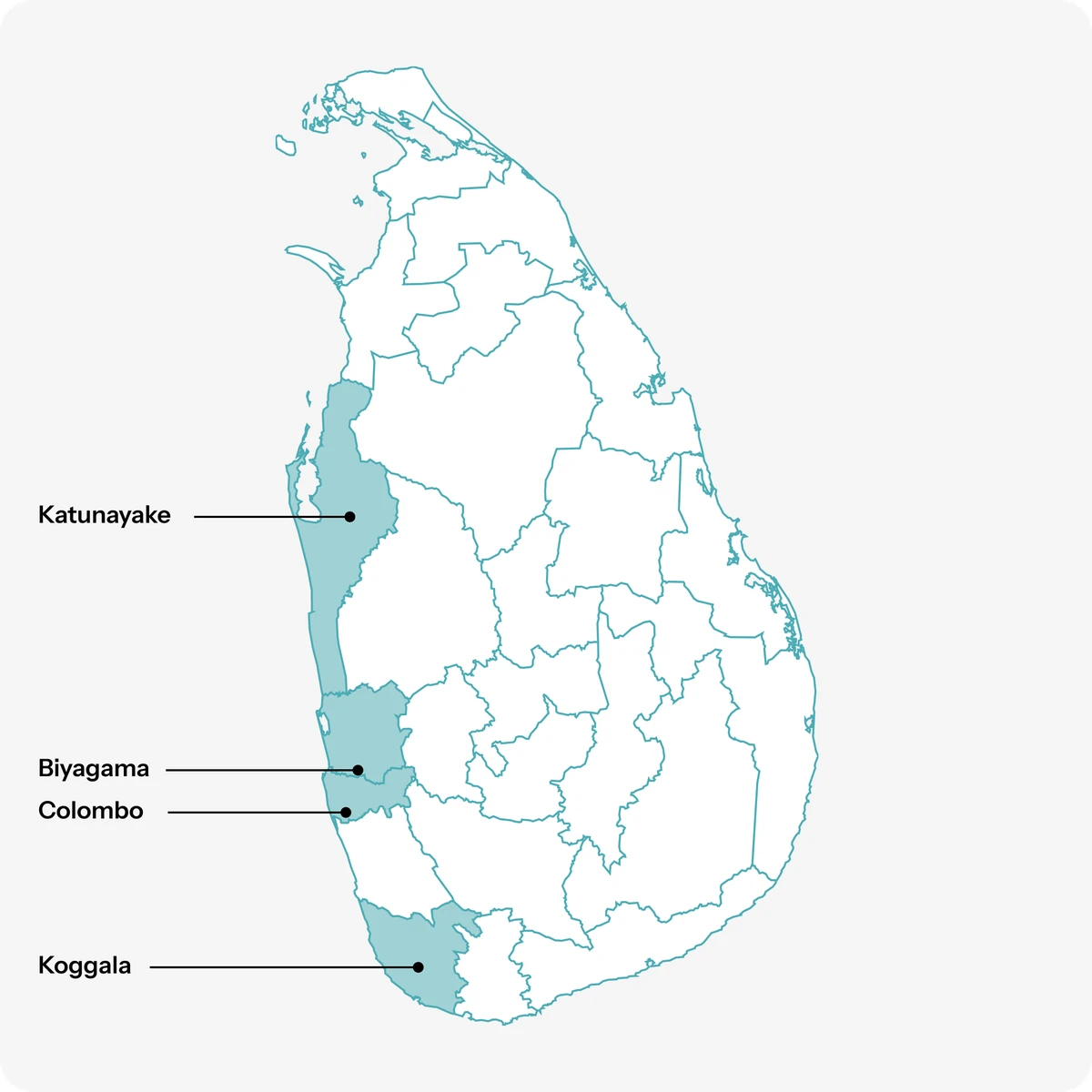
Sri Lanka’s apparel sector is led by Cut-Make-Trim (CMT) production, with most export factories being SMEs spread nationwide. Despite higher labour costs, the country is recognized for reliability and product quality, enhancing its global reputation. The industry upholds the “Garments without Guilt” ethos, ensuring ethical practices and community upliftment. Sri Lanka also set a global benchmark in sustainability, hosting the world’s first LEED Platinum-rated apparel factories.
Limited Recycling and Growing Training Efforts in Sri Lanka’s Textile Sector
10–20 tonne per month
Textile Waste Generation by a Firm.
Sri Lanka’s post-industrial textile waste is generated in large quantities and overwhelmingly managed through incineration or landfilling. Recycling infrastructures and managerial initiatives remain largely absent.
Sources: Managing Post-Industrial Textile Waste: Current Status and Prospects for Sri Lanka, Sri Lanka Promotes Advanced Textile Recycling Technology
National Policy on Waste Management (2020)
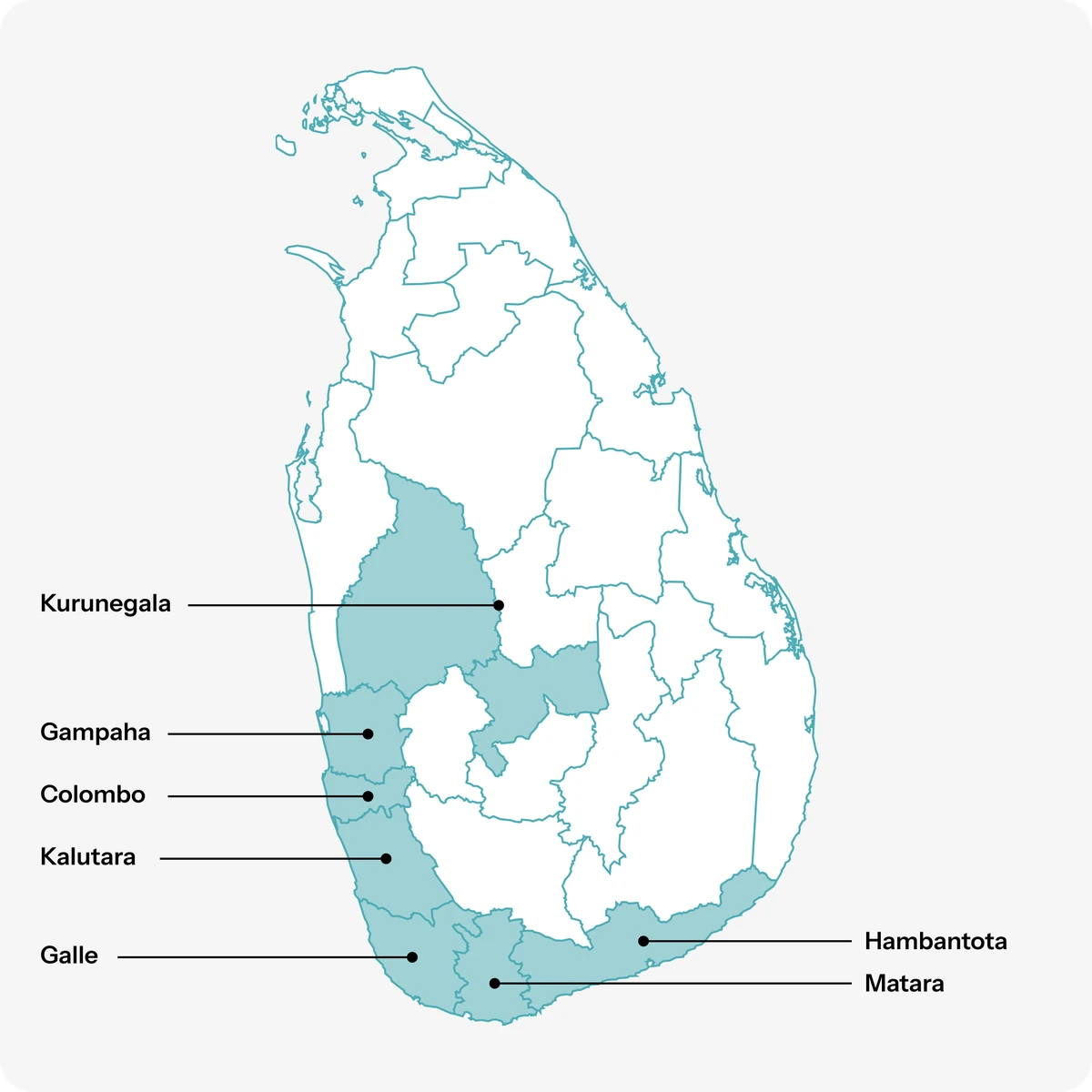
It envisions sustainable waste management for healthier lives and a cleaner environment, with goals extending to 2030. It provides comprehensive directions for managing all waste streams—solid, liquid, and gaseous—while addressing short-term challenges and long-term sustainability. The policy also sets out measures on education, research, institutional coordination, legal and financial mechanisms, and international compliance to ensure effective implementation
SourcesNational Policy on Sustainable Consumption and Production (SCP)
Guided by the principle of minimizing natural resource use, toxic materials, and waste across all economic sectors, Sri Lanka’s SCP policy emphasizes resource and energy efficiency, life-cycle thinking, and avoiding rebound effects. It aims to decouple economic growth from environmental degradation by lowering material and energy intensity, preventing waste and emissions, and fostering sustainable consumption patterns. With targets through 2030—including reduced waste generation and halved per-capita food waste—the policy promotes pollution prevention, green job creation, and structural incentives for sustainable practices across production and consumption
Sources0.51 kTon
Import quantities
(HS 6309, 631010) – 2023
17.36 kTon
Export quantities
(HS 6309, 631010) – 2023
29.3%
Share of modern renewables in final energy consumption (2021)
82%
Renewable electricity generation: Hydro
9%
Renewable electricity generation: Wind
8.8%
Renewable electricity generation: Solar PV
Notes:
- Soorya Bala Sangramaya: It encourages the installation of small solar systems by offering three key incentive schemes: net-metering, where surplus power is exported and credited for future use; net-accounting, which pays LKR 22/kWh for excess electricity during the first seven years and LKR 15.50/kWh thereafter; and net-plus, a gross-metering model where all exported solar power is compensated in cash. Sources
- Secure, Affordable, and Sustainable Energy for Sri Lanka: A $150 million program to help reduce fossil fuel reliance and accelerate solar and wind energy projects.It supports clean electricity access for families and businesses, grid modernization, and mobilizing private investments with risk guarantees to encourage green energy deployment. Sources