- Bangladesh
- Belgium
- Canada
- China
- Egypt
- Germany
- India
- Indonesia
- Japan
- Morocco
- Netherlands
- Pakistan
- Poland
- Spain
- Sri Lanka
- Tunisia
- Turkey
- UK
- USA
- Vietnam
Poland’s Rising Role as an EU Regional Sourcing Hub
€10.9B
Apparel Export (2023)
€12.51B
Apparel Import (2023)
Poland is the sixth-largest apparel exporter in Europe and the only Eastern European country among the EU’s top 10 importers . Unlike most EU countries, its sourcing from developing countries is growing, while others shift toward nearshoring. With rising exports and competitive labour and warehousing costs, Poland is emerging as a key regional distribution hub
SourcesHigh Raw Material Import Dependence and Shift Toward Sustainable Raw Materials in Textiles
$303M
Cotton Import
The country relies heavily on imports to meet its raw material needs due to very limited domestic cotton production, a dependence that has grown in recent years. To align with EU regulations and rising demand for eco-friendly textiles, it is increasingly channeling investments into sustainable materials such as organic cotton and recycled fibres.
Sources: Polish Textile and Apparel Industry, Cotton in Poland
SME-Driven Industry with Stronger Innovation in Textile Production
70%
Poland’s T&A industry is made of SMEs
SMEs make up majority of Poland’s textile and apparel industry, mostly private entities. The sector is split into 31% textile and 69% apparel producers, with textile production more concentrated and apparel more fragmented. Productivity is highest in textile spinning and lowest in apparel manufacturing reflecting greater investment in R&D and innovation in the earlier, more industrialized stages of production
SourcesTextile Waste Sorting Hub with Low Domestic Recycling
300 kt/year
Sorting Capacity
Poland is a major export hub for sorting used & wasted textiles. It is one of the EU’s top receivers of waste textiles. Much of this material is re-exported. However, domestic reuse/recycling is low with Poland landfilling a large share of its collected textile waste
Sources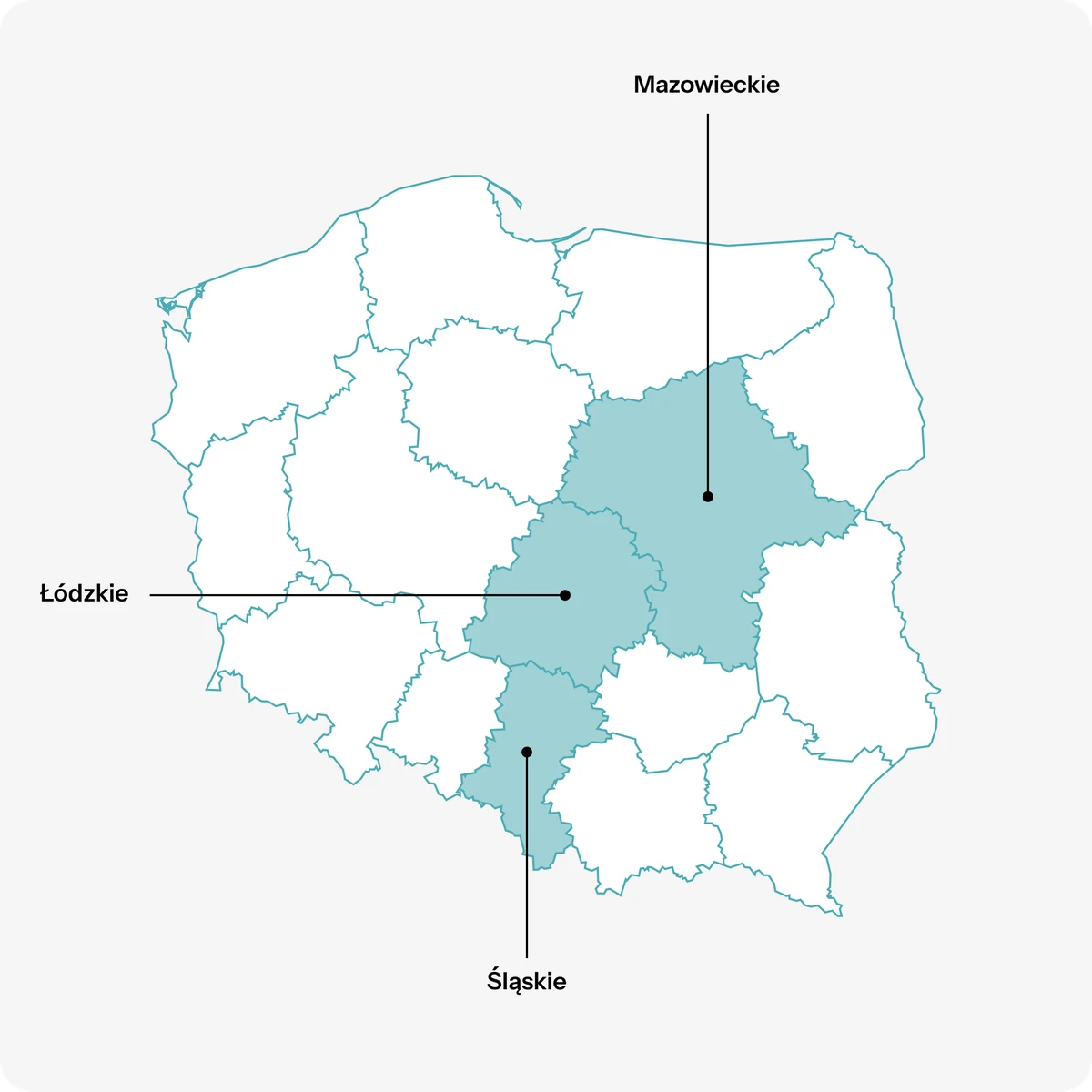
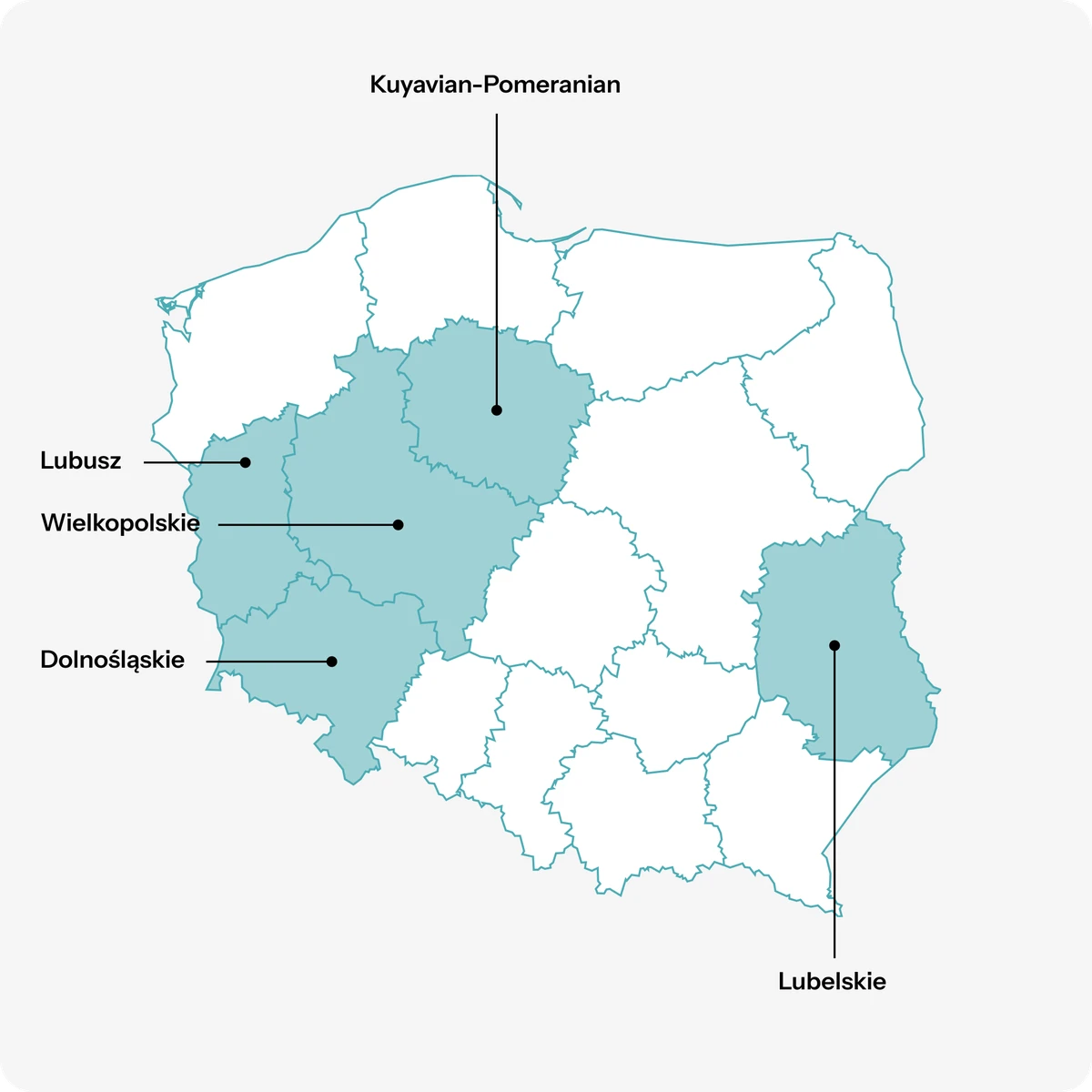
Key regions with fibre production:
Dolnośląskie, Lubelskie, Kuyavian-Pomeranian, Lubusz, Wielkopolskie
Sources: Mapping Poland’s Bio-Based Potential,, The Textiles and Clothing Industries
EU Strategy for Sustainable and Circular Textiles
It is a comprehensive plan aiming to transform how textiles are designed, produced, consumed, and disposed of across the EU. It includes measures to make textiles durable, repairable, recyclable, and largely made of recycled fibers, while addressing overproduction, microplastic release, and greenwashing. The strategy sets the goal to achieve a sustainable and circular textile sector by 2030, aligned with the European Green Deal and Circular Economy Action Plan.
SourcesWaste Framework Directive
Strengthens waste management by mandating all EU member states to separately collect textile waste from January 1, 2025 and imposing Extended Producer Responsibility (EPR) schemes requiring producers to finance and organize the entire lifecycle management of their products’ waste. It emphasizes the waste hierarchy prioritizing prevention, preparing for reuse, recycling, recovery, and environmentally sound disposal, with clear definitions on when waste ceases to be waste (end-of-waste criteria)
SourcesEU Waste Shipment Regulation
Effective May 20, 2024, it tightens controls on waste shipments, including textiles, within and outside the EU. It bans most waste exports for disposal after May 21, 2026, requires audits, digital tracking, and enforces stricter penalties. The law supports the circular economy by ensuring environmentally safe waste management.
SourcesEcodesign for Sustainable Products Regulation (ESPR)
Effective July 18, 2024, it mandates durability, repairability, recyclability, and increased recycled content for textiles and most products. It requires Digital Product Passports, bans destruction of unsold textiles by large companies, and enforces life cycle environmental impact reduction. The regulation enables product-specific rules and harmonized penalties, driving a circular economy and sustainable production.
Sources148.21 kTon
Import quantities
(HS 6309, 631010) – 2024
204.81 kTon
Export quantities
(HS 6309, 631010) – 2024
Notes:
- The top exporters of used textiles to Poland in 2022 were Germany, the United Kingdom and the Netherlands Sources
- The primary pathway for post-consumer textiles is re-export, followed by downcycling into industrial wipers for domestic and export use and lastly domestic SHC reuse and energy recovery through refused derived fuel (RDF) Sources
15.2%
Share of modern renewables in final energy consumption (2021)
62%
Renewable electricity generation: Wind
28.5%
Renewable electricity generation: Solar PV
9.6%
Renewable electricity generation: Hydro
Notes:
- Polish State aid instrument: It provides financial grants of 15–35% for large-scale low-carbon investments, supporting job creation and sustainable projects like renewable energy and green technologies. It targets strategic net-zero economy projects with aid available until the end of 2025, requiring beneficiaries to maintain investments and jobs for several years. Sources
- PFR Green Hub: It is a strategic investment program by the Polish Development Fund that provides financial support to accelerate renewable energy projects and green technologies in Poland Sources