- Bangladesh
- Belgium
- Canada
- China
- Egypt
- Germany
- India
- Indonesia
- Japan
- Morocco
- Netherlands
- Pakistan
- Poland
- Spain
- Sri Lanka
- Tunisia
- Turkey
- UK
- USA
- Vietnam
Amongst the Top 10 EU Suppliers of Apparel
$4.08M
Textiles and Apparel Exports (2022)
Source: Thematic Review: Circularity and Morocco’s Textile Industry
$4.38M
Textiles and Apparel Imports (2022)
Source: Morocco Textiles and Clothing Exports, Imports, Tariffs
Morocco’s textile industry is a vital economic sector, accounting for 15% of industrial GDP and 11% of exports in 2021. The majority of production is exported to the EU, making Morocco the seventh-largest clothing supplier to Europe. Key markets include France, Spain, Germany, Italy, and the UK, with Inditex as the largest buyer.
Dependence on Imported Raw Materials
85%
Raw Materials Used are Imported.
Investments are heavily focused on downstream activities rather than upstream processes. Morocco imports much of what it needs in terms of upstream supplies, including yarn, fabric, and accessories from Asia and Turkey.
Sources: Thematic Review: Circularity and Morocco’s Textile Industry, Policy brief for Morocco
CMT-Focused Textile and Apparel Industry
88%
Exports are Clothing
Morocco has over 1,100 companies that manufacture around a billion garments annually, with more than half operating as subcontractors for major brands. The textile and clothing industry is regionally concentrated, with a heavy focus on clothing.
SourcesConcentrated Textile Waste and Growing Recycling Efforts
90%
Textile Waste is Geographically Concentrated Across 3 Regions
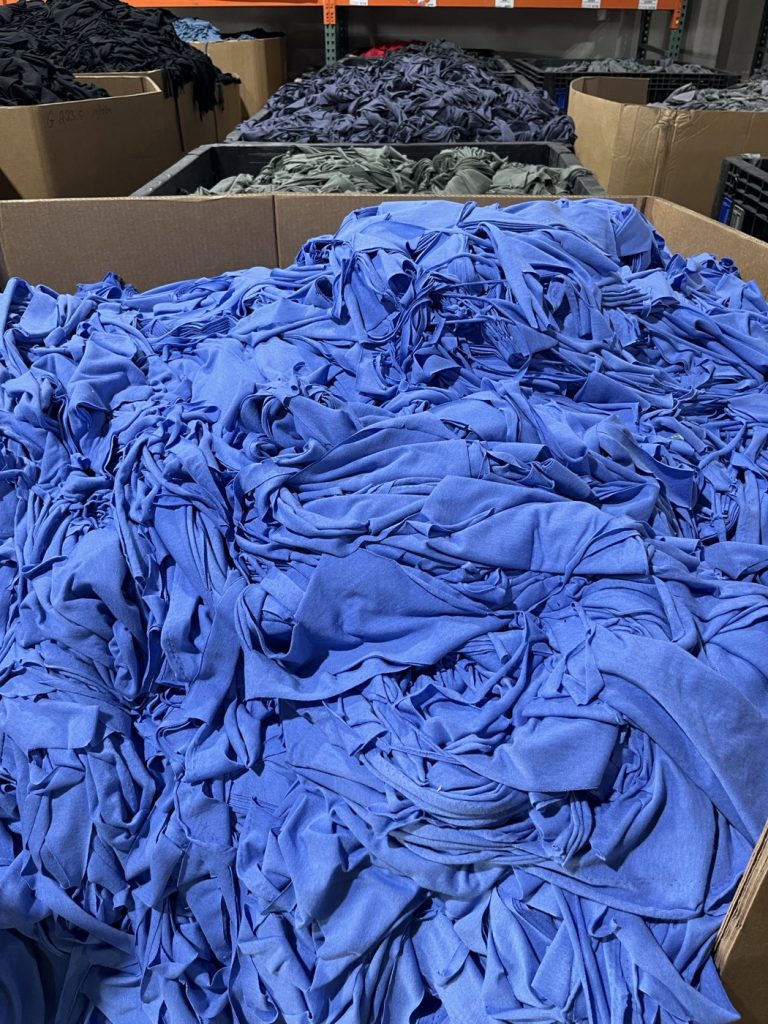
Over 60% of Morocco’s textile waste originates from cutting processes, with more than 75% concentrated in the Greater Casablanca and Tangier regions. Waste management is largely informal and lacks traceability, but growing investments aim to improve sorting for high-value domestic recycling and export opportunities.
Sources| Waste Type | Composition | Price | Notes |
|---|---|---|---|
| Post-industrial | Cotton | $0.41 – $0.54 /kg | |
| Post-industrial | Mixed | $0.05 – $0.27 /kg |
Notes:
Sources- Source & conversion rate: 1 Emirati Dirham = US Dollar 0.27 (August 2025)
- In Morocco, textile waste generally follows two main pathways. When a recycler or exporter places a request for a specific grade, such as pure cotton or linen, factories separate and bale the material accordingly, issuing a traceability sheet before it is either recycled locally or exported. In the absence of such requests, textile waste is collected along with general waste by collectors, who later sort it in their warehouses.
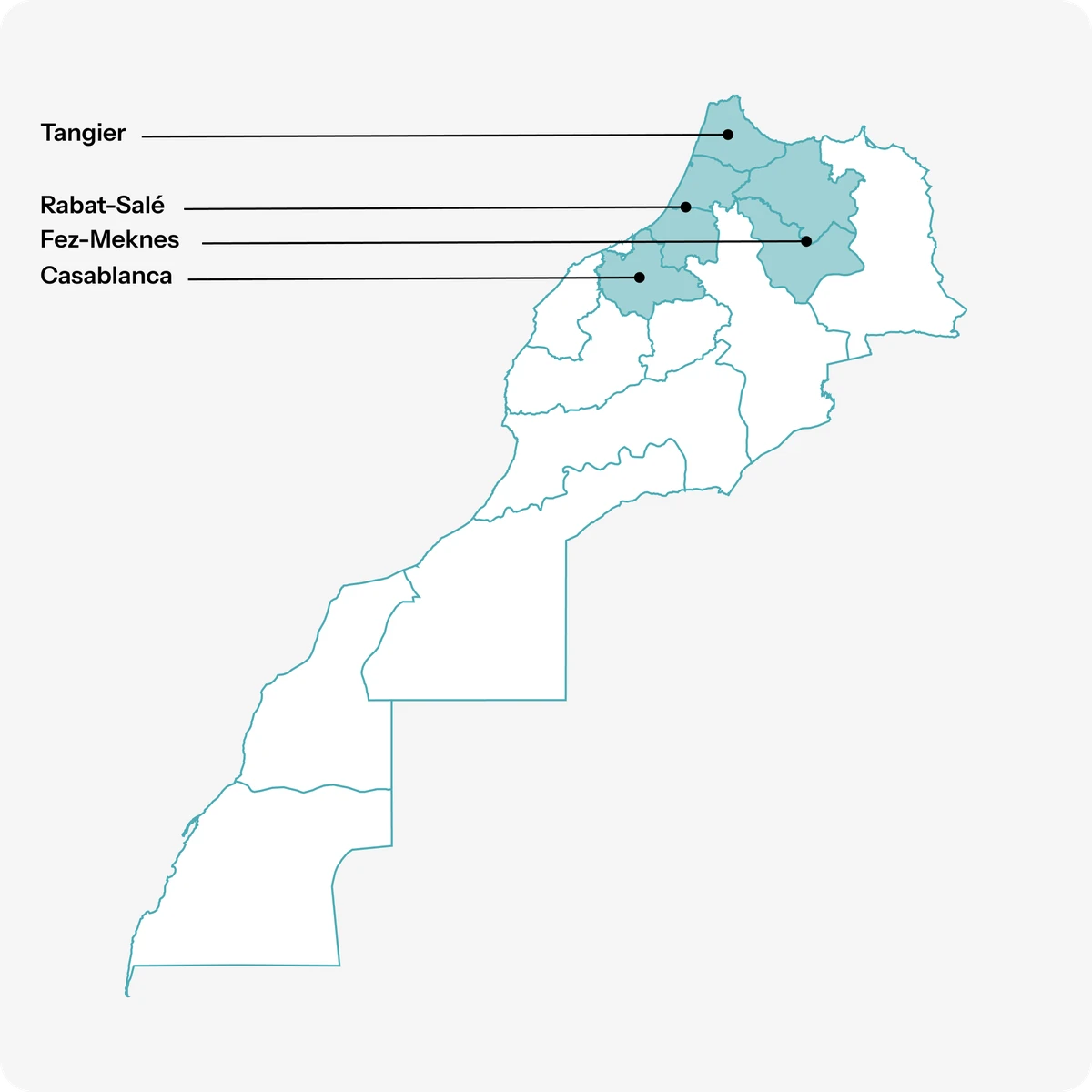
Key regions with apparel production:
Tangier, Casablanca, Rabat-Salé and Fez Meknes
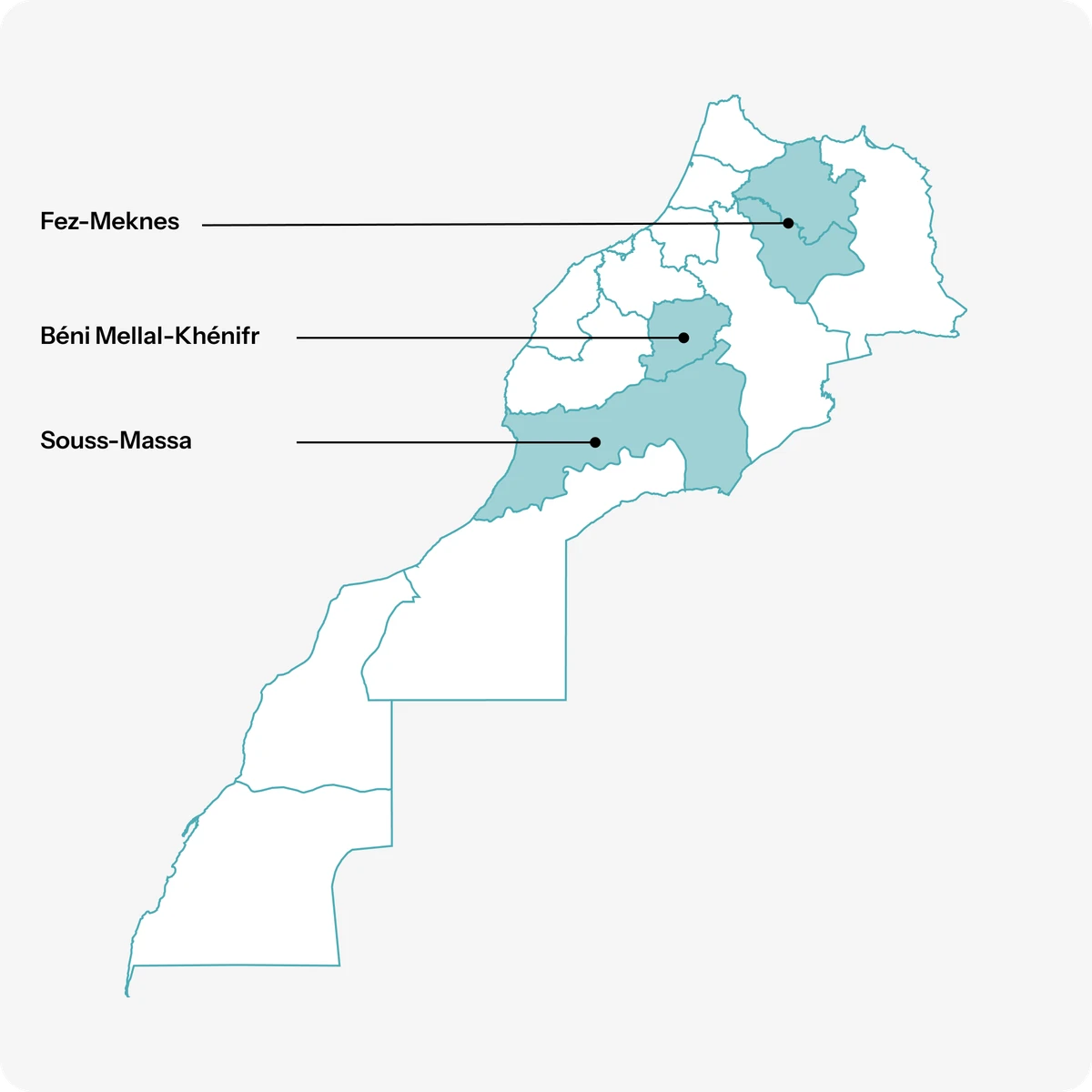
Key regions with fibre production:
Souss-Massa, Fez-Meknes, Béni Mellal-Khénifra
Notes:
- The regions benefit from developed infrastructure and proximity to ports for export. Sources
Morocco’s National Circular Economy Roadmap
It is currently in development, with the process officially launched in April 2025. Led by the Ministry of Energy Transition and Sustainable Development with support from UNIDO, the EU, and Finland, the roadmap aims to accelerate Morocco’s shift to a low-carbon, resource-efficient economy. It will be developed through an inclusive, multi-stakeholder process and completed by the end of 2025.
Sources61.73 kTon
Import quantities
(HS 6309, 631010) – 2023
11.90 kTon
Export quantities
(HS 6309, 631010) – 2023
Notes:
- High-quality waste is mainly exported without shredding.
8.03%
Share of modern renewables in final energy consumption (2021)
72%
Renewable electricity generation: Wind
23%
Renewable electricity generation: Solar
5%
Renewable electricity generation: Hydro
Notes:
- Investment Tax Credit (ITC): Offers up to 30% tax credit on investments in certain industries, including emerging strategic sectors such as renewable energies, digitalization, information technologies, and circular economy Sources
- FONZID II Programme (2025): It is a dedicated financial mechanism aimed at co-financing the creation, expansion, and upgrading of industrial zones to meet high standards of sustainability, inclusiveness, and competitiveness. Sources